
This post may contain affiliate links. If you make a purchase through links on our site, we may earn a commission.
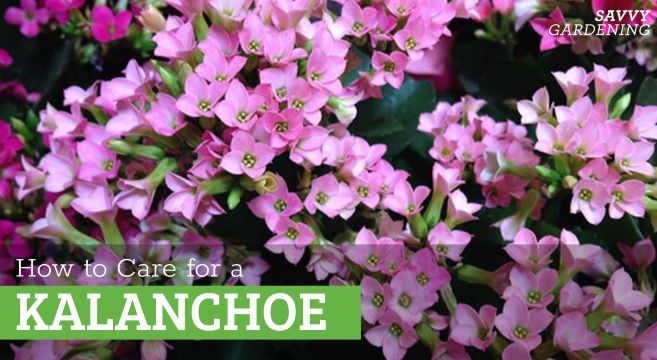
Flowering kalanchoe plants are reasonably low-maintenance houseplants that draw you in at the garden center because of their numerous, cheerful, tiny flowers. Once those blooms have faded, the plant features succulent leaves that are interesting enough to look at while you wait for a fresh flush of flowers. Paying a little bit of attention to kalanchoe care will ensure your plants thrive year-round—and rebloom for you.
Bearing in mind that there are multiple varieties of Kalanchoe, such as panda plant (Kalanchoe tomentosa), paddle plant (Kalanchoe thyrsiflora), and mother of thousands (Kalanchoe daigremontiana), among others, I’m going to focus on the flowering kalanchoe (Kalanchoe blossfeldiana) that you find at the garden center, grocery store, or nurseries, usually in late fall and early winter when you’ll also find familiar flowering plants, like anthuriums and cyclamen for sale.

Kalanchoe blossfeldiana is often simply labeled with “Kalanchoe” as the common name on plant tags. It is also called flaming Katy, Christmas kalanchoe (because of the time of year you see it in stores), florist kalanchoe, and widow’s thrill.
The plant was discovered in Madagascar by botanist Robert Blossfeld, hence the eponymous “blossfeldiana” part of the name. Because of its origins, the plant will grow outdoors in a warm climate (about zone 9 and up), but anyone in lower zones enjoys growing it as a houseplant. Kalanchoe is an upright plant that can reach up to eight inches (about 20 centimetres) in both width and height. The great thing is kalanchoe blooms are not fleeting. They will last for up to eight weeks.
Be sure to keep your kalanchoe plants away from pets as they are toxic if eaten.
A kalanchoe care must: Finding the right light
Kalanchoes come in a range of colors to suit your décor—and your flower pots—from white, yellow, orange, and red, to pink and magenta. Plant breeding has yielded some interesting petal details, as well. Generally you’ll see these plants in varying sizes around the holidays, among other festive houseplants, like poinsettias, cyclamen, and Thanksgiving cactus.

Kalanchoes crave a lot of natural light, so be sure to place your houseplant in a bright area. In the winter, especially, choose a west- or south-facing window.
If you’ve brought home a plant that is already blooming, you can get away with placing it somewhere that gets a bit less light to help prolong the blooming period. At this point it can tolerate cooler conditions. In general, ideal temperatures for kalanchoe grown indoors is about 60 to 85 degrees Fahrenheit (15.5 to 29 Celsius). Through the summer months, keep it in a warm, sunny window.

Watering your kalanchoe
Because they are succulent plants, kalanchoes can be a bit forgiving if you forget to water (unlike plants like peace lilies, which wilt at the first sign of drying out). Allow the soil to dry out completely between watering. Wait until the first few inches/centimeters of soil are dry before watering your plant.
Avoid getting water on the leaves as that can lead to blemishes, and potentially rot.

Bottom watering your plant ensures that it gets the water it needs through capillary action, while protecting the leaves. Just be sure to avoid leaving the plant in water. Give it a drink and then put it back in its usual spot.
If the leaves start to wilt and appear to be limp, it’s possible you are underwatering your kalanchoe. Overwatering can lead to the same result. Overwatering can also lead to root rot, so do keep an eye on the base of the plant through the foliage, so you can easily spot problems before they get worse.
Fertilizing your kalanchoe
Fertilize your kalanchoe in the spring, when it’s not flowering. Use an organic liquid fertilizer as part of your regular houseplant fertilizing schedule.

How to prolong kalanchoe blooms—and encourage them to rebloom
Deadheading all those small flowers on a kalanchoe will encourage more flowering. Use a sharp, clean pair of scissors to snip away blooms at the base of the cluster. When kalanchoe is not in bloom, it has nice succulent foliage that you can display among other houseplants.
To get your kalanchoe plant to rebloom for you, you’ll need to trick the plant by exposing it to lower light levels that mimic shorter days. This is why it’s referred to as a “short-day plant,” just like your Thanksgiving cactus. Time this with the changing of the seasons as the days get shorter in the late fall. Over the course of about a month, water the plant less, if at all. Expose the plants to only about eight or nine hours of light a day. You can put it in a closet in complete darkness for the rest of the time. Once you start to see flower buds, move the houseplant back to its bright light position. You can also resume watering the plant.

Potential pest issues
The most common indoor plant pests that could afflict your kalanchoe includes scale, mealybugs, aphids, and spider mites. This article on types of houseplant bugs provides tips on spotting and dealing with all three pests.
Repotting a kalanchoe
If your kalanchoe outgrows its pot, or you want to add it to something a little nicer than your standard garden center plastic, wait until the plant has finished flowering before moving it. Choose a pot that is slightly larger than the current one and make sure it has drainage holes. The soil needs to drain thoroughly between watering to avoid rotting.
Use a potting soil formulated for succulents that contains a bit of grit so that it drains well between watering. You could also add a bit of perlite or vermiculite to a houseplant potting soil, which will help with drainage.

We received the kalanchoe as a gift several years ago. It bloomed and continued to grow, but never rebloomed. We live in Mobile, AL, so weather if anything is usually too hot. However, my plant has many “children”. When a stem would break off, I just stuck it in the dirt in the pot and it usually would grow w/o any other help. They have been outside under the the awning on the patio which seems to be a good spot, but are they getting enough darkness that way? Should I put them in a darker place? I have not fertilized any of them, so I should do that, but what else do I need to do? Thank you!
Hi Elaine, I’m more familiar with getting a kalanchoe to rebloom by growing it indoors in a cold climate. I would check in with a local master gardener’s group or extension office for advice on getting your plants to flower.
I have a few of these and they recently all took a turn for the worse. Perhaps b/c our temps are 100+ for the past 6 weeks? The ends of the stems are green and have leaves, but the stems right at the dirt level are brown, so thin (thinner than string) and crispy, and break at the slightest touch. Too much water? Heat? Help! Thank you.
100+ is pretty hot… I would try moving them into the shade. Or even bringing them indoors for some respite…
Great article. I learned a lot about kalanchoes.
I was given a beautiful orange flowering kalanchoe at the end of June. It’s big enough that I had to set it outside for the summer months and it has been blooming its heart out. But I live in central Wisconsin and the nights are starting to get cool.
Our property is a woodland-type lot so I like to make sure houseplants that enjoy the summer outside are free of mites and other pests before I bring them in.
I’ve never had a succulent as a houseplant. Would a simple soapy solution or oil solution be safe on my kalanchoe?
Hi Carol, You can probably debug as you would your other houseplants. If your pot has holes, you can also drench the soil to drive the bugs out before bringing indoors. Take a close look at the undersides of the leaves and the stems for any evidence of pests.
Hi Courtney, I would wait until the plant has finished flowering.
Hi,
I bought my Yellow Kalanchoe over a year ago for Easter. It was a clearance plant, put in my front window and it has thrived. I had blossoms in December and it hasn’t stopped blooming. The plant itself is outgrowing the container and I want to replant but I don’t want to kill it. It’s beautiful and healthy. I would love to send photo. The bottom is growing way over the edge and I’m not sure how I would trim it. Please help me out.
Hi Christine, It sounds like it could benefit from a bigger pot (make sure it has a drainage hole!). Kalanchoe plants don’t like to be root-bound. I would wait until it has finished flowering before repotting.
My kalanchoe is in the grocery store pot with the spongy, water hogging peat-like medium that doesn’t drain or release water at all.
I want to repot/resoil it with a better draining mixture, but it is still flowering!
Should I wait – or will it be okay to go ahead and change the soil while it is still flowering??
Hi. I keep my plant on the windowsill where it is exposed to less light in the fall and winter I have desert rose next to it. The desert rose flowered but the kalenoche did not. I don’t understand why it wouldn’t given the natural cycle of light it’s receiving. What am I missing? TIA
Hi Julie, If you refer to the part of the article that talks about putting it in a dark room, you may want to try that.
I just received this beautiful plant as a gift. I live in Southwest Florida. Can I plant this in my garden? Will it survive here all year ?
Hi Ann, Yes, I do believe you can plant kalanchoe in Florida. I would ask for tips at your local garden center that are tailored to your region.
My Kalenchoe is dying. I repotted the plant and the stalk now looks like dried out wood with a few branches off that or green with leaves. Can I get those to root possibly if I cut them off?
It’s worth a try to propagate a healthy piece from a stem cutting!
I just received a beautiful Yellow Kalanchoe plant for Easter and the flowers are already turning brown. It gets plenty of morning sun. Do I cut the flowers off and will it rebloom or do I just leave it alone. Can this plant be planted outdoors.
Thank you.
This is normal! Once the flowers die back, you can simply brush them away and it will rebloom eventually. The steps described above can help it to bloom. If you harden it off, you can bring it outside during the summer, but you’ll have to bring it back indoors for the winter depending on your zone.
The leaves on my daughter’s plant are turning brown. She got her plant around Christmas. What should she do? Thanks
Hi Sharon, it’s possible the plant is being overwatered – or that water touched the leaves, which can sometimes leave a mark.